
Indian smartphone sales, traditionally dominated by the entry and mid-range segments, are set to change as high-end and super-premium devices capture consumer attention. The premium category is expected to grow by more than 20 per cent in calendar year (CY) 2024 compared to the previous year. While the overall smartphone market is expected to w

Toyota Kirloskar Motor (TKM) has reported a consolidated net profit of Rs 4,787 crore for 2023-24 (FY24) - more than three times the earnings recorded the previous year. This growth can be attributed to robust demand for its vehicles, particularly hybrid models and cross-badged cars from the Toyota-Suzuki alliance.

India's foreign exchange reserves dropped by $1.49 billion to reach $575.27 billion as of February 3, snapping a three-week rising trend, RBI data showed on Friday. In the previous reporting week, the overall reserves had jumped by $3.03 billion to $576.76 billion. In October 2021, the country's forex kitty had reached an all-time high of $645 billion.

The US treasury department informed about the sanctions following the October 7 attacks on Israel by Hamas.

Employers seek individuals who can prioritise tasks, solve problems, and work within deadlines, notes Ankit Aggarwal, founder and CEO, Unstop.

India's forex reserves dropped by $691 million to $562.808 billion as of December 23, making it the second consecutive week of decline in the kitty, according to the RBI data. The overall reserves had dropped by $571 million to $563.50 billion in the previous reporting week, snapping a five-week trend of an increase in the kitty. In October 2021, the country's foreign exchange reserves reached an all-time high of $645 billion.

This is despite the fact that total FDI into India has fallen by 22 per cent from $58 billion in FY22 to $46 billion in FY23, according to the Reserve Bank of India.

Beauty and Personal Care (BPC) e-retailer Honasa Consumer's initial public offering (IPO) has failed to find backing from analysts due to the company's weak financial track record and expensive valuation. T Manish, research analyst at Samco Securities suggests avoiding the IPO as the company's financial performance does not inspire confidence. "The profit has been inconsistent and advertising and marketing expenses are incredibly high at around 40 per cent of the revenues.

The demand for flexible office space is emerging as India's top short-term portfolio strategy, as 47 per cent of companies want to increase its use over the next 12 months, according to a survey by property consultant CBRE. Flexible office space is a workspace designed to provide employees with a variety of different places and ways to work. These spaces can be easily modified to fit the needs of any new project or role.

The finance ministry on Thursday sought to clarify that there was no distress in household savings and the data indicated that changing consumer preference for different financial products was the real reason for the change in the pattern of household savings. The clarification comes in the backdrop of Reserve Bank of India data showing that household net financial savings rate is at its lowest in decades, at 5.1 per cent of GDP in FY23 compared to 7.2 per cent of GDP in FY22. The divergence in the data for household gross financial assets and liabilities is not a cause for concern for the government, as the loans have largely been taken to buy real assets or automobiles, the finance ministry said.

Chief Economic Advisor (CEA) V Anantha Nageswaran on Tuesday said India is not defending the rupee and the Reserve Bank of India is taking necessary steps to ensure that the movement of the rupee is gradual and in line with market trends. Nageswaran further said that the rupee is being managed in a manner that reflects the fundamentals of the economy. "India is not defending the rupee... I don't think Indian fundamentals are such that we need to defend the rupee. "The rupee can take care of itself," he said at an event in New Delhi.

Inflation has reappeared as a global issue in both advanced and emerging economies and India needs to be wary of "imported inflation", especially due to high oil prices, according to the Economic Survey 2021-22 released on Monday. "Inflation has reappeared as a global issue in both advanced and emerging economies. "India's Consumer Price Index inflation stood at 5.6 per cent YoY in December 2021 which is within the targeted tolerance band," the survey report presented in the Parliament by Finance Minister Nirmala Sitharaman noted.

China reported 17,166 asymptomatic cases with a majority of them in Shanghai, China's business hub of 26 million.

During the week, gold reserves decreased by $200 million to $26.709 billion.

India's manufacturing sector growth steadied in May, with new orders and production increasing at similar rates to those registered in the previous month, while demand showed signs of resilience and improved further in spite of another uptick in selling prices, a monthly survey said on Wednesday. The seasonally adjusted S&P Global India Manufacturing Purchasing Managers' Index (PMI) stood at 54.6 in May, little changed from 54.7 in April, pointing to a sustained recovery across the sector. The May PMI data pointed to an improvement in overall operating conditions for the eleventh straight month.
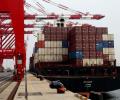
The WTO's quarterly outlook indicator, comprising seven trade parameters, stood at 96.3, the lowest since March 2010 and down from 98.6 in November. Exports from India would be hit if there is a slowdown in world trade.

The country's leading automakers Maruti Suzuki and Hyundai Motor reported a decline in dispatches to dealers in March as shortage of electronic components impacted production. On the other hand, Tata Motors, Skoda and Kia India posted their highest ever monthly wholesales last month. Toyota Kirloskar Motor said its dispatches in March were the highest in the last five years while Mahindra & Mahindra also reported a robust increase in its passenger vehicle dispatches in March.

The Auto Component Manufacturers Association of India on Wednesday sought reduction in GST rate to a uniform level of 18 per cent for the entire automobile industry to stimulate demand and help save around 10 lakh jobs, which are at risk due to prolonged slowdown in vehicle sales.

Mop up grows 10% y-o-y at Rs 1.05 trillion, almost equal to levels in February before a nationwide lockdown to contain the coronavirus pandemic

Global chip maker Intel on Monday said it could take a couple of years to address the supply shortage in the semiconductor ecosystem that is witnessing huge demand for tech products, accelerated by the COVID pandemic. Intel CEO Pat Gelsinger noted that the work and study-from-home trends during the COVID-19 pandemic have led to a "cycle of explosive growth in semiconductors" that has placed huge strain on global supply chains around the world. "We have been working diligently with our partners... to address constraints and increase output to meet demand, and we are acting to help ensure capacity to meet the world's needs for this new era... But, while the industry has taken steps to address near-term constraints, it could still take a couple of years for the ecosystem to address shortages of foundry capacity, substrates and components," he said at a virtual session at the Computex event.

The move will primarily impact luxury car companies like Mercedes Benz, BMW, Audi and Volvo and bike brands like Triumph and Harley Davidson.

Ahead of the second instalment of advance tax, the revenue department is scrutinising entities that have registered negative growth in their tax deducted at source (TDS) payments, even when they reported healthy advance tax payments. According to sources, taxmen have observed a mismatch in TDS payments from at least 60-65 small to mid-sized companies. Officials said it is unusual for TDS to not increase, given the improved turnover and profits - if higher advance tax payments are any indication.
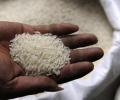
A 6-7 million tonnes shortfall in rice production due to a fall in paddy sowing area is likely to keep rice prices at elevated levels, adding to the inflationary pressure that the slowing economy is already grappling with. Elevated food prices, including that of cereals, had led to retail inflation reversing a three-month declining trend, to touch 7 per cent in August. Similarly, the wholesale price inflation, which declined to 11-month low, also showed price pressures from cereals resulting from wheat output being impacted by severe heat waves in some parts of the country.

Finance Minister Nirmala Sitharaman on Wednesday raised the personal income tax rebate limit, doled out sops on small savings and announced one of the biggest hikes in capital spending in the past decade as she did a tight rope walk in the Budget between staying fiscally prudent and meeting public expectations in the year before general elections.

Continuing their rising trend, the country's foreign exchange reserves increased by $1.350 billion to touch a record high of $361.601 billion in the week to April 22.

Is the curated and limited data put out by the central government sufficient enough to pass a judgement on the trend in GST collections, particularly that of the Centre?

As the central bank continues to increase forex reserves by running down the forward book which totalled $42 billion as of end-July, signalling its strong resolve to build a bigger reserve cushion to aid its expansionary, unorthodox monetary policy, the reserves are set to top the $655-billion-mark by March, according to a report. The forex kitty declined by $2.10 billion to $619.36 billion for the week to August 13 due to a fall in the core currency assets and gold, showed the latest RBI data. The reserves had risen to a lifetime high of $621.46 billion in the previous reporting week ending August 6.

The industry is expecting double-digit growth on a year-on-year basis, helped by a possible price correction after softening of raw material inputs and factors such as positive sentiments, pent up demand and improving economic conditions. Besides, a shift in consumer behaviour from price consciousness towards technologically advanced premium products with quality, value proposition and safety aspects leading to a rise in demand for home automation products is making the industry upbeat. With the government's production linked incentive (PLI) scheme for white goods, which has witnessed a committed investment of Rs 4,614 crore, in place, many manufacturers are gearing up to make the most out of the opportunity as well as take steps towards reducing their dependency on imports and make products more affordable.

The number of ultra rich falls to 2.56 lakh in 2018 from 2.63 lakh. As much as Rs 262 lakh crore of the wealth possessed by the high networth individuals are in the form of financial assets, while the rest are parked in physical assets.

The return of the unemployment rate to pre-lockdown times is not worth celebrating because it is more a reflection of a shrinking labour force than a decline in the count of the unemployed, observes Mahesh Vyas.

Fruits, vegetables and eggs continued to witness deflationary trend during January this year, with their prices declining 4.18 per cent, 13.32 per cent and 2.44 per cent, respectively.

'An explanation perhaps lies in the culture of revisions that has grown deep roots in the government data collection system,' notes A K Bhattacharya.

Trends like bundled offers and 4G-LTE feature phones could become mainstream in 2018

Reserves had touched an all-time high of $355.46 billion in the week to June 19.
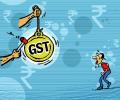
The broad trends of GST collections will make you wonder if indeed the biggest indirect tax reform in the country has led to a real improvement in revenues, notes A K Bhattacharya.

During the first quarter ended June, gross tax collections fell 31 per cent driven down by a massive 76 per cent plunge in advance tax mop-up, as the country was in a full lockdown due to the pandemic.

Among food articles, vegetable prices surged by 69.69 per cent mainly on account of onion, which witnessed 455.83 per cent jump in prices, followed by potato at 44.97 per cent.

New participants included Chinese players such as Great Wall Motors and Haima Automobile along with Olectra.

The currency market won't care for our moans, groans, cries and sighs. The rupee will find its own level, explains Tamal Bandyopadhyay.
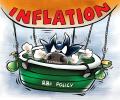
Currently, the retail inflation is well below the RBI's comfort level. The government has asked the central bank to keep inflation in the range of 4 per cent.
